- English
- Українська
Guidelines for Authors
Article Templates
To accelerate the manuscript preparation and peer-review process, please use the official Conference Proceedings templates:
Download Article Template (UKR) — for articles in Ukrainian.
Download Article Template (ENG) — for articles in English.
REQUIREMENTS FOR THE STRUCTURE AND CONTENT
The full article size, including all required structural elements, must not exceed 14 pages in A5 format.
In accordance with the editorial policy of the scientific collection, priority is given to papers that contain original research results and clearly demonstrate scientific novelty.
The requirements for the structure and content of the article comply with the Recommendations of the European Association of Science Editors (EASE) for authors and translators of scientific articles in English (APA 7th Ed. style ) and the provisions of the National Standard of Ukraine DSTU 7152:2020. Publications. Design of publications in journals and collections.
The structural elements of a manuscript include:
- UDC index.
- Digital Object Identifier (DOI).
- Information about the author(s).
- Title.
- Abstract.
- Keywords.
- Main text.
- Information on authors’ contributions.
- Acknowledgments, sources of funding (optional).
- References list.
- Dates of submission to the journal and editorial-publishing processing of manuscript.
- Translation of author(s) information, title, abstract, and keywords.
- UDC INDEX
The UDC index is placed in the page upper left corner.
- DIGITAL PUBLICATION IDENTIFIER (DOI)
The DOI identifier is placed in a separate line under the UDC index. The Conference Proceedings publisher assigns the digital DOI identifier.
- INFORMATION ABOUT THE AUTHOR(S)
The order of authors must be determined before submitting the manuscript (see "Authorship and co-authorship" in editorial policy). Any changes made after manuscript submission must be approved by all authors. Information about the author should include the following elements:
- first and second name;
- academic degree, academic title;
- unique identifier of the research author ORCID ID;
- corporate e-mail of the author(s);
- main place of work or study at the time of research (institution or organization name), city, country.
Authors should indicate their affiliation with the specific institution as listed on its official website.
The number of authors in one manuscript should not exceed five.
Abbreviations in the names of academic degrees, academic titles and positions in Ukrainian and English are requested to be submitted in accordance with the table 1.
Table 1
Abbreviations in the names of scientific degrees, scientific titles and positions
|
In Ukrainian |
In English |
|
Academic titles |
|
|
акад. НАН України |
Active Member of the National Academy |
|
чл.-кор. НАН України |
Corresponding Member of the National Academy of Sciences of Ukraine |
Scientific degrees
|
д-р (…) наук |
DSc (…) |
|
д-р геол.-мінерал. наук |
DSc (Geol. & Mineral.) |
|
д-р геол. наук |
DSc (Geol.) |
|
д-р геогр. наук |
DSc (Geogr.) |
|
д-р техн. наук |
DSc (Engin.) |
|
д-р біол. наук |
DSc (Biol.) |
|
д-р фіз.-мат. наук |
DSc (Phys. & Math.) |
|
канд. (…) наук |
PhD (…) |
|
канд. геол.-мінерал. наук |
PhD (Geol. & Mineral.) |
|
канд. геол. наук |
PhD (Geol.) |
|
канд. геогр. наук |
PhD (Geogr.) |
|
канд. техн. наук |
PhD (Engin.) |
|
канд. біол. наук |
PhD (Biol.) |
|
канд. фіз.-мат. наук |
PhD (Phys. & Math.) |
|
д-р філософії |
PhD |
Academic titles
|
проф. |
Prof. |
|
доц. |
Assoc. Prof. |
|
докторант |
Doctoral Student |
|
асист. |
Assist. |
|
ст. наук. співроб. |
Senior Researcher |
|
ст. дослідник |
Senior Researcher |
|
мол. наук. співроб. |
Junior Researcher |
|
наук. співроб. |
Researcher |
|
асп. |
PhD Student |
|
ад'юнкт |
PhD Student |
|
студ. |
Student |
|
бакалавр |
Bachelor |
|
магістр (який/а вчиться) |
Master's Student |
|
магістр (який/а захистив/ла диплом) |
Master of Arts |
|
ст. викл. |
Senior Lecturer |
|
викл. |
Lecturer |
|
провід. наук. співроб. |
Leading Researcher |
|
голов. наук. співроб. |
Principal Researcher |
|
провід. інж. |
Leading Engineer |
|
інж. |
Engineer |
-
- TITLE
It should be unambiguous, understandable to specialists in other fields, informative and specific: 5-9 words corresponding to the content of the article, without phrases such as " Research question... " , " Some questions... " , " Problems... " etc. For an original research article, it is preferable to add a research descriptor to the title, for example "cross-sectional study", "practical study", "survey results" (see more details on title requirements in the EASE (European Association of Scientific Editors) Guidelines for Authors and Translators of Scientific Articles to be Published in English.
WARNING! Authors submit two versions of the article — with metadata - information about the authors (file Authors. Title) and without metadata (file for review. Title). This is necessary for double anonymous peer review.
- ABSTRACT
The abstract should reflect the manuscript content, as it will be the primary information source about the research for most readers (many databases contain only the title and abstract).
The abstract of the original research manuscript should be structured and informative and should contain the following points:- Introduction (prerequisites, relevance and purpose of the study).
- Methods.
- Results.
- Сonclusions.
See the requirements for an abstract in the Recommendations of the EANR (European Association of Scientific Editors) and Allan Gau's tutorial "Writing an effective abstract" (extended abstract).
The abstract of a review manuscript can be unstructured, indicative, it should highlight the main theses of the review.
The length of the annotation is not less than 1,000 characters and not more than 1,800 characters (with spaces).
- KEYWORDS
For an original research manuscript - 4-8 keywords.
For a review manuscript - 3-6 keywords.
Keywords should not repeat the manuscript title.- MAIN TEXT
The volume of the main text
Review / original research article — from 2,000 to 3,000 words (up to 20,000 characters).
Structure of the article
An original research manuscript should be prepared using the IMRAD-framework and contain the following basic elements:- Introduction (prerequisites, relevance, purpose and tasks of the research).
- Methods.
- Results.
- Discussion and conclusions.
Detailed requirements for each of the specified structural elements of the article are given in the Recommendations of the EANR (European Association of Scientific Editors) for authors and translators of scientific articles.
The review article should also be prepared using the IMRAD structure without the "Methods" section.Illustrations, tables. All figures (schemes, graphs, charts, etc.) and tables must be numbered with Arabic numerals and placed directly in the text where they should be according to the content (and not at the end of the document).
Explanatory captions should be given to the figures (below the figure, a separate paragraph), and thematic titles to the tables (above the table, a separate paragraph). Captions and titles should reflect the content of figures and tables, be concise and informative. Each figure or table should be referred to in the main text of the manuscript and their number should be indicated, for example: (Table 1), (Fig. 1).
Table 1
CT doses reported as maximum, median, 3rd quartile values of DLP (mGy·cm)
|
Weight group |
Number of scans |
Max |
Median |
Q3 |
|
Head |
||||
|
<1 |
27 |
- |
119 |
158 |
|
1 -<5 |
55 |
|
215 |
265 |
|
5 -<10 |
55 |
- |
232 |
280 |
|
10 -<15 |
51 |
- |
275 |
327 |
|
15 -<18 |
25 |
- |
297 |
335 |
|
0 -<3m |
6 |
|
111 |
117 |
|
3m-<1y |
21 |
- |
140 |
175 |
|
1-<6y |
75 |
- |
228 |
270 |
|
6-<18y |
111 |
- |
269 |
323 |
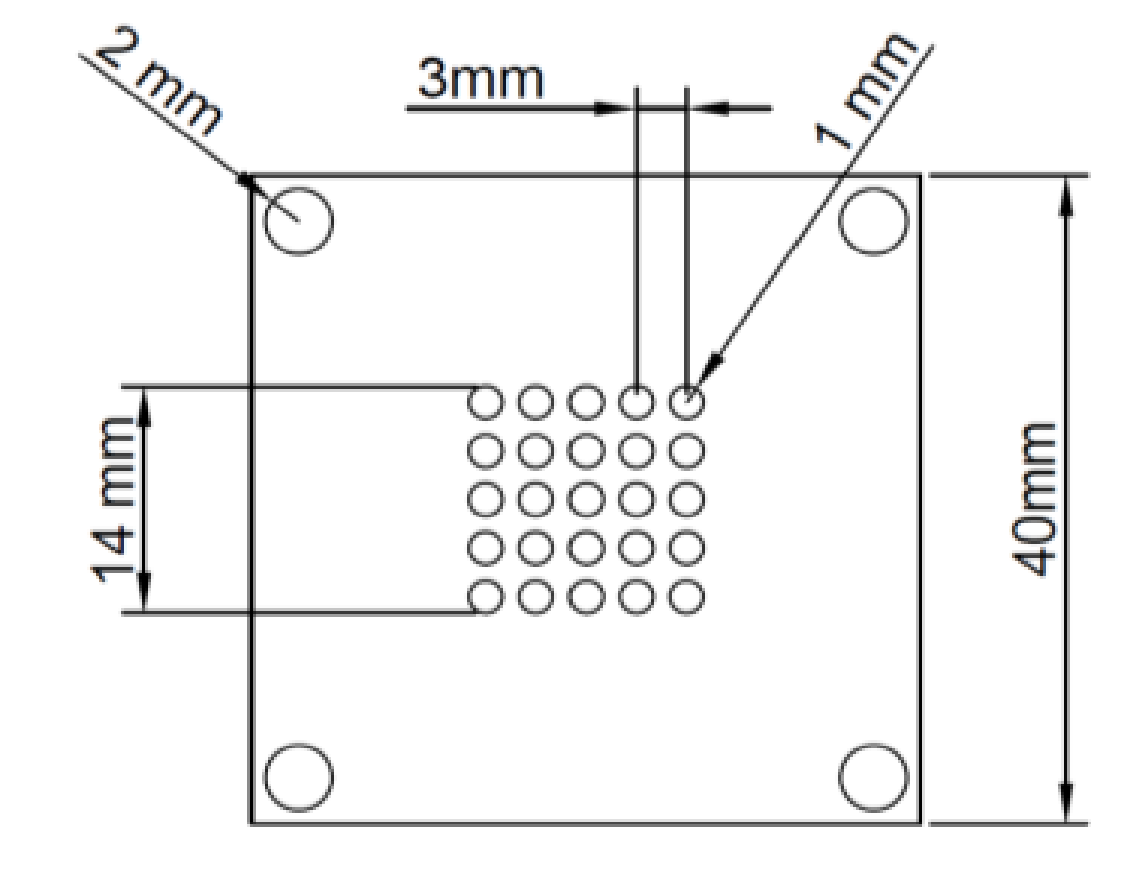
Fig. 1. Lead collimator prototype
- INFORMATION ON AUTHORS` CONTRIBUTION
It is necessary to indicate information about the contribution of the authors to the preparation of the manuscript in accordance with CRediT (Contributor Roles Taxonomy):
- Conceptualization. Ideas; the formulation or evolution of overarching research goals and objectives.
- Formal analysis. Application of statistical, mathematical, computational or other formal methods for analysis or synthesis of empirical research data.
- Software. Programming, software development; design of computer programs; implementation of computer code and auxiliary algorithms; code component testing.
- Methodology. Development or design of methodology; creating models.
- Data validation. Checking the reproducibility of results/experiments and other research results.
- Writing (original draft). Writing the initial version (draft) of the article.
- Writing (review and editing). Making significant changes and additions to the manuscript.
For example:
Contribution of the authors: Name, Surname — conceptualization, methodology; Name, Surname — software, formal analysis; Name, Surname - data validation, spelling (original draft); Name, Surname - writing (viewing and editing).
- ACKNOWLEDGMENTS, SOURCES OF FUNDING
Mention all people who have made significant contributions to the research but are not co-authors: coordinated the execution of research activities, provided resources (research materials, reagents, laboratory specimens, animals, instruments, computing resources, or other analysis tools).
Specify all sources of funding. Recommended format: "This work was supported by the Medical Research Council (grant number xxxx)».
WARNING! If there was no funding, there is no need to write anything.
- REFERENCES LIST
Bibliographic descriptions in the list of bibliographic references are given according to the bibliographic style of citation APA style references (7th Edition).
Sources in the list of used sources are not numbered and are presented alphabetically.
A DOI (if available) must be provided for each source.
The article in Ukrainian provides TWO lists of used sources:
The list of used sources in the original language (bibliographic descriptions are submitted according to the bibliographic style of citation APA style reference).
The article in English provides ONE list of used sources — References, in which the bibliographic description of the sources is not in Roman script, but, for example, in Cyrillic, Arabic, Chinese, etc., is given in English translation, the language of the source is indicated in square brackets at the end of the bibliographic description in English — [in Ukrainian], [in Bulgarian], etc. — and add a bibliographic description in the source language in square brackets. For example:
Dimitrova, T. L. (2014). Education in medical physics in Europe – modern and up-to-date. Physics: Teaching Methodology, 2(4), 254–261 [in Bulgarian]. [Димитрова, Т.Л. (2014). Обучението по медицинска физика в Европа – модерно и актуално. Физика: Методология на обучението, 2(4), 254–261].
FORMAT OF REFERENCES TO SOURCES IN THE TEXT
In-text vocations are given in round brackets with the indication:
- surname of the author (if the author is one) or the first words of the title of the manuscript (for publications without authors), followed by a comma of the year of publication and, if necessary, followed by a comma of the pages after the abbreviation "c." (in Ukrainian) or "p." (in English). The title of the work can be abbreviated, and the missing words can be marked with the sign "three dots"):
(Freeberg, 2019), (Freeberg, 2019, p. 147), (Freeberg, 2019, pp. 56–57), (Information strategy …, 2022, с. 5), (Cancer in Ukraine... indicators of oncology service activity, 2023);
- surnames of all co-authors (if there are two or three authors), year of publication:
(Cornell, & Harlow, 2003; Nazarenko, & Drats, 2021), (Dormus, Brown, & Bloom, 2013);
- surnames of only the first co-author (if there are more than three authors), the abbreviation "etc." or "et al.", year of publication):
(Grady et al., 2019; Nazarenko et al., 2022);
- surname and initials of the author, year of publication (if the article contains references to the works of authors with the same surname, published in the same year):
(Reinberg, Т., 2005);
- author's surname, year of publication of the first work, year of publication of the next work (if the article contains references to the works of the same author, published in different years, the author's surname is not duplicated):
(Gibson, 2007, 2010);
- surname of the author, year of publication, lowercase Latin letter after the year of publication (if the article contains references to the works of the same author published in the same year):
(Gibson, 2005a, 2005b, 2005c);
EXAMPLES OF FORMATION OF BIBLIOGRAPHICAL DESCRIPTIONS (according to APA style references)
Book edition
Author, AA (year of publication). The name of the book. Publishing house.
Tang, X. (2023). Spectral multi-detector computed tomography (sMDCT): data acquisition, image formation, quality assessment and contrast enhancement. CRC Press.
For electronic books or books that have electronic versions, the URL is indicated at the end of the bibliographic description, for example:
Svendsen, S., & Løber, L. (2020). The big picture/Academic writing: The one-hour guide (3rd digital ed.). Hans Reitzel Forlag. https://thebigpicture-academicwriting.digi.hansreitzel.dk/
Brück, M. (2009). Women in early British and Irish astronomy: Stars and satellites. Springer Nature. https:/doi.org/10.1007/978-90-481-2473-2.
Zhenchenko, M. (2019). Digital transformations of the publishing industry. 2nd ed., changes. Reaper. https://www.zhnets.com.ua/zhenchenko-maryna- tsyfrovi- transformatsiyi-vydavnychoyi-galuzi-kyyiv-zhnets-2019-2-ge-vyd-zmin-409-s/
Article in the journal
Author, A. A. (year of publication). Title of the article. Name of the journal, volume number (issue number), pages, URL.
Ramazanov, D. M., & Anokhin, I. E. (2023). Development of a tungsten matrix collimator for electronic spatially fractionated therapy. Science and Technology Today, 12(26), 626–636. https://doi.org/10.52058/2786-6025-2023-12(26)-626-636
Shen, C.-C., & Chu, Y.-C. (2021). Beamforming with Complementary Subset Transmit for Ultrasound Coherence-Based Power Doppler Detection in Multi-Angle Plane-Wave Imaging. Sensors, 21, 4856. https://doi.org/10.3390/s21144856
Conference materials, published in the conference proceedings
Author, A. A. (year). Publication title. In Surnames of the editors of the collection (ed.), Name of the conference: No. Title (pages). Publisher. URL
Aslamova, L., Zabolotnyy, M., Dovbeshko, G., Solyanik, G., Gnatyuk, O., & Tsapko, M. (2023). Irradiation of physiological solution with high energyelectrons – a way of increase cytotoxic/cytostatic effect. In Urbonavičius B.G. et al. (Eds.), Medical Physics in the Baltic States 2023 (pp. 149–152). Kaunas University of Technology. http://medphys.lt/medphys2023/images/MedPhys23/Proceedings%20of%20the%20conference.pdf
Dissertation
Published
Author, A. A. (year). Dissertation title [Type of work, University]. Database. URL
Apalkov, V.V. (2023). Psychological mechanisms of regulating the behavior of prisoners of war by means of symbolic mimicry. [Diss. of the candidate of psychological sciences (PhD), The National Defense University of Ukraine named after Ivan Cherniakhovskyi]. State registration number: 0823U100459 [in Ukrainian]. https://nuou.org.ua/assets/documents/dr-kep-apal-23.pdf
Moss, C. L. (2015). Expanded internet art and the informational milieu (Publication No. 3740855). Doctoral dissertation, New York University. PQDT Open. https://pqdtopen.proquest.com/doc/1753118023.html?FMT=AI
Abstract
Zainchkivska, I. P. (2020). Ethno-religious dimensions of the creative heritage of I. Ohienko. Autoref. thesis ... candidate Philos. Sciences, National Pedagogical University named after M. P. Drahomanov. ENPUIR. http://enpuir.npu.edu.ua/handle/123456789/28228
Normative legal acts, standards
Verkhovna Rada of Ukraine. (1998). About human protection from the effects of ionizing radiation (law of Ukraine dated 17.09.2023, No. 15/98-VR, citation 3344-IX). Bulletin of the Verkhovna Rada of Ukraine, 1998, No. 22, Art. 115 [in Ukrainian]. https://zakon.rada.gov.ua/laws/show/15/98-%D0%B2%D1%80#Text
International Organization for Standardization. (2018). Occupational health and safety management systems – Requirements with guidance for use (ISO Standard № 45001:2018). https://www.iso.org/standard/63787.html
Detailed requirements and examples of formatting bibliographic descriptions can also be found in: Publication Manual of the American Psychological Association (APA), 7th Edition and in Examples of formatting references according to APA (7th ed.) in the list of sources used.
To correctly compile bibliographic descriptions in the list of used sources, you can use specialized programs, for example: https://www.grafiati.com/uk/
- DATES OF SUBMISSION TO THE JOURNAL AND EDITORIAL-PUBLISHING PROCESSING OF MANUSCRIPT
At the end of the article, information is provided in the format:
Отримано редакцією збірника / Received:
Прорецензовано / Revised:
Схвалено до друку / Accepted:
- TRANSLATION OF AUTHOR(S) INFORMATION, ARTICLE TITLE, ABSTRACT, AND KEYWORDS
Information about the manuscript title, author(s)` information, abstract (at least 1000 characters) and keywords of the manuscript translated into English for Ukrainian-language manuscript or in Ukrainian for English-language manuscript are submitted at the end after the references list used and receipt date of the manuscript to the editorial office of the Conference Proceedings.
At the end of each manuscript, after translating the title, information about the author(s), abstract and keywords of the manuscript into English for Ukrainian-language manuscript or into Ukrainian for English-language manuscript, we must add the following text:
FOR ONE AUTHOR
The author declares no conflicts of interest. The funders had no role in the design of the study; in the collection, analyses or interpretation of data; in the writing of the manuscript; in the decision to publish the results.
Автор заявляє про відсутність конфлікту інтересів. Спонсори не брали участі в розробленні дослідження; у зборі, аналізі чи інтерпретації даних; у написанні рукопису; в рішенні про публікацію результатів.
FOR TWO OR MORE AUTHORS
The authors declare no conflicts of interest. The funders had no role in the design of the study; in the collection, analyses or interpretation of data; in the writing of the manuscript; in the decision to publish the results.
Автори заявляють про відсутність конфлікту інтересів. Спонсори не брали участі в розробленні дослідження; у зборі, аналізі чи інтерпретації даних; у написанні рукопису; в рішенні про публікацію результатів.
REQUIREMENTS FOR THE TECHNICAL DESIGN OF THE ARTICLE
The technical design of the article must meet the requirements of the Publishing and Printing Center of Taras Shevchenko Kyiv National University, in particular:
- The text must be submitted as a file in WinWord format (*.doc, *.docx) without using style markup .
- Page parameters:
- line spacing — single;
- аparagraph indentation — 0.5 cm;
- format — A5;
- fields:
|
upper |
2,5 |
lower |
2,5 |
|
the left |
1,8 |
right |
1,8 |
|
from margin to header |
1,7 |
||
|
from margin to footer |
1,7 |
||
- Formatting parameters of structural elements:
- UDC index — Arial, 8 pt, bold;
- DOI index — Arial, 8 pt, bold;
- information about the author(s) — Arial, 8 pt, bold;
- manuscript title is Arial Black, 10 pt, bold, all capital letters;
- abstract (in Ukrainian and English) — Arial, 8 pt, italics;
- points in the structured annotation ("Introduction", "Methods"...) — Arial, 8 pt, semi-bold, sparse 2 pt;
- the main text of the manuscript — Arial, 9 pt, normal;
- tables (names and tabular data) and figures (notation and signature) — Arial, 8 pt;
- authors' contribution — Arial, 8 pt, regular;
- Acknowledgments, sources of funding — Arial, 8 pt, plain;
- list of sources used — Arial, 7 pt, regular ;
- information on dates of receipt and processing — Arial, 7 pt, bold, thin 1 pt;
- Additional requirements for the text of the article:
- enter each abbreviation in the text in brackets after the first mention of the corresponding full phrase; only then can you use the entered abbreviation;
- submit all citations in the language of the article (regardless of the language of the original), necessarily accompanying them with links to the source and a specific page;
- all citations from the list of used sources must be given in the text; all vocations given in the text should also be included in the list of references;
- mark missing places of quotations with square brackets with three dots: […];
- write formulas in articles using the formula editor (Microsoft Equation or MathType Equation) and the Microsoft Office formula editor, font size 10 pt;
- between the numerical value and the abbreviated name of the unit of measurement of the quantity, put a continuous interval (Ctrl+Shift+Space);
- adhere to the following format of graphic signs: quotes "…", apostrophe …'…, dashes … – … (you should use a short [–] dash, not a long [—] or hyphen [-]);
- to mark the range (from ... to ...) put a short dash: p. 95–97, 30–40s, April–May, Kyiv–Lviv;
- do not allow the replacement of Latin letters with Cyrillic letters and vice versa (for example, Latin o, a, c, x, p, e, H, T, I, M, B with Cyrillic letters o, а, с, х, р, е, Н, Т, И, М, В), especially in the surname and first name of the author, title of the article, abstract, keywords, bibliographic citations, as this may cause erroneous indexing of the publication and make it impossible to identify it in search and bibliometric systems.

